
A painting estimate should do more than present a total. It should help you understand what will be painted, how the surfaces will be prepared, what products are planned, and what happens if the scope changes.
That level of detail is not paperwork for paperwork’s sake. It is how you compare proposals fairly and start the project with fewer assumptions. Whether you are refreshing one room or planning a full exterior repaint, a clear estimate gives you something to review, ask about, and approve with confidence.
The short answer: look for a defined scope
At a minimum, your estimate should make it possible to answer three questions:
- What is included?
- How will it be done?
- What is not included unless we agree to it later?
The best estimates are specific enough to guide the project but readable enough that a homeowner can follow them. You should be able to see the areas being painted and identify where the painter expects preparation, repairs, primers, or special products.
Big Picture Painting says its free in-person consultation includes walking through the space and putting together a detailed estimate that accounts for project variables. Big Picture Painting A walkthrough is valuable because it creates room for questions that photos and square footage alone may not reveal.
Your painting estimate checklist
Use this checklist when you review a proposal. A blank line is not necessarily a dealbreaker, but it is a reason to ask for clarification before you sign.
| Estimate section | What to look for | Why it matters |
|---|---|---|
| Areas and surfaces | Named rooms, walls, ceilings, trim, doors, cabinets, or exterior elevations | Prevents assumptions about what is included |
| Preparation | Cleaning, patching, scraping, sanding, caulking, priming, or other needed steps | Prep affects appearance and coating performance |
| Paint system | Product line, sheen, color responsibility, and number of coats where appropriate | Lets you compare like with like |
| Protection and cleanup | Masking, furniture or landscape protection, daily housekeeping, and final cleanup | Sets expectations inside and around the home |
| Repairs and exclusions | Known repairs, unknown conditions, and items outside the scope | Gives a path for surprises |
| Project communication | Contact person, approval process, and how changes are recorded | Keeps decisions visible and organized |
| Final review | A walkthrough or closeout process | Lets you review the work before the project wraps |
Preparation should be written, not assumed
“Prep included” can mean different things to different people. Ask what it means for your walls, trim, siding, masonry, or metal.
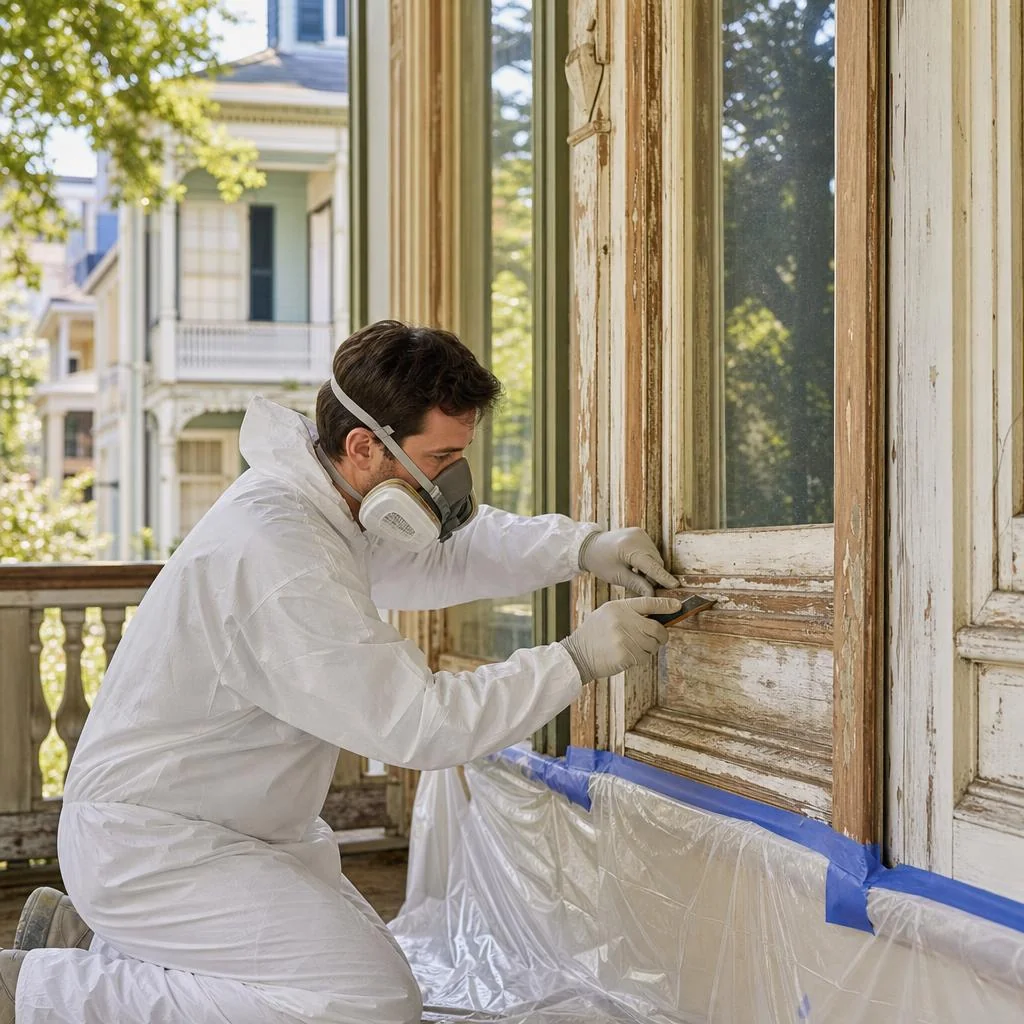
Sherwin-Williams explains that a properly prepared surface should be clean, solid, dry, and free of cracks and imperfections. Sherwin-Williams preparation guidance For previously painted surfaces, its guidance includes cleaning away dirt and residue, removing loose paint, repairing holes and cracks, sanding as needed, and priming bare areas. Sherwin-Williams preparation guidance
That does not mean every estimate needs a long technical manual. It means the scope should say enough that you know whether visible cracks, peeling areas, stains, repairs, or bare spots have been discussed.
For exterior work, ask how weather and substrate condition will be handled. Product instructions matter, as do the condition of the surface and the timing of application. See how long exterior paint lasts in Louisiana for a practical maintenance and preparation perspective.
Products and color decisions belong in the conversation
An estimate should identify the intended coating system clearly enough that you can ask questions. You may want to confirm the product line, sheen, locations where different sheens will be used, and who will make final color selections.
Color is not a minor detail; it can change how a room feels and how connected your finishes look. Big Picture Painting lists color consultation as part of its stated process. Big Picture Painting If color guidance matters to you, ask when that conversation will happen and what decisions should be made before work begins.
Before a full application, Sherwin-Williams recommends testing the planned paint in an inconspicuous spot and checking for adhesion or compatibility concerns after the appropriate drying time. Sherwin-Williams preparation guidance A sample can make a color decision feel much less abstract.
Make exclusions and changes easy to understand
Every home has unknowns. An estimate does not need to predict every hidden repair, but it should give you a clear way to handle something discovered after work begins.
Ask how additional repair work, added rooms, color changes, or product substitutions will be documented and approved. The answer should be written in plain language. You should know who can authorize a change and how it may affect the scope.
This is also the time to read any scheduling, payment, cancellation, and warranty language carefully. If a term is unclear, ask for an explanation in writing. Do not rely on a quick verbal summary for decisions that matter to you.
What to ask your painter
Use these questions to turn a proposal into a true plan:
- Can we walk through each included surface together?
- What preparation is included for the condition you see today?
- Which repairs are included, and which would be handled separately if needed?
- What product and sheen are planned for each area?
- How will floors, furniture, landscaping, and adjacent surfaces be protected?
- What is excluded from this estimate?
- How will change requests be priced and approved?
- What happens during the final walkthrough?
Compare estimates side by side
Do not compare proposals from memory. Put them next to each other and mark the differences in scope, prep, products, exclusions, and closeout. If one estimate is shorter, send a polite list of questions rather than filling in the blanks yourself.
The goal is not to force every contractor into the same format. It is to make sure you know what you are buying. A detailed estimate supports a calmer project because it turns expectations into a shared reference.
Get a detailed, in-person view of your project
Big Picture Painting offers a free in-person estimate so you can walk through your home, discuss the work, and receive a detailed estimate. Schedule your free in-person estimate.
Continue planning with how to choose a painting contractor in New Orleans and professional painting vs. DIY.