If your New Orleans home was built before 1978, lead safety belongs in the conversation before anyone sands, scrapes, cuts, or disturbs painted surfaces. This is not a reason to panic or postpone every update. It is a reason to plan carefully, ask direct questions, and verify the right credentials for the scope of work.
Lead-based paint was banned for consumer use in 1978, but the EPA says it remains in millions of homes. EPA consumer RRP guidance When older painted surfaces are disturbed, dust and chips can become a hazard. EPA consumer RRP guidance
This guide is for homeowners preparing to hire. It is not legal advice and does not determine whether a specific project is covered by federal, state, or local requirements.
Why the age of the home matters
The EPA’s Renovation, Repair and Painting (RRP) program addresses work in housing and child-occupied facilities built before 1978. The agency says the rule generally covers paid work that disturbs paint, including painting preparation, remodeling, repair, carpentry, plumbing, electrical work, and window replacement. EPA contractor RRP overview
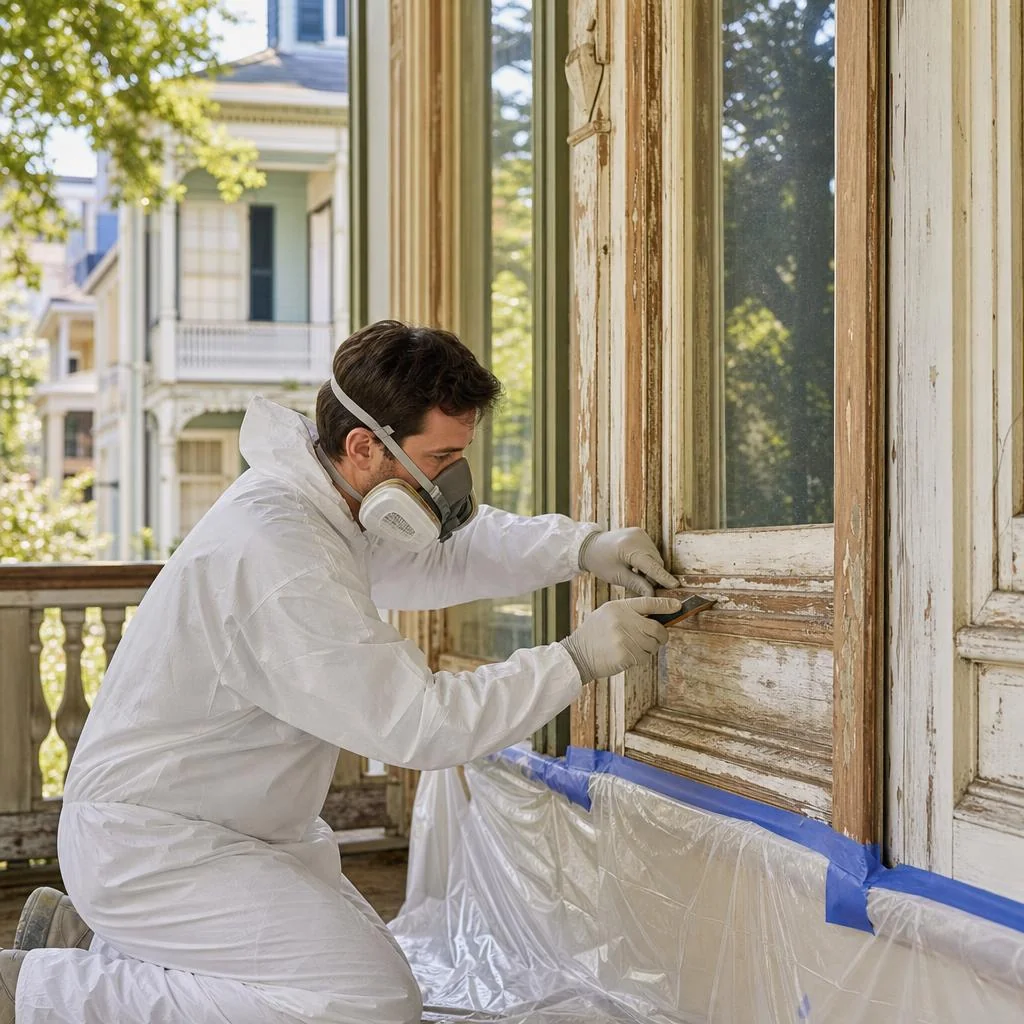
The reason is simple: ordinary renovation and maintenance activities can create toxic lead dust. EPA contractor RRP overview The consumer-facing EPA guidance specifically calls out activities such as sanding, cutting, and window replacement as work that can disturb lead-based paint. EPA consumer RRP guidance
The date of your home is a starting point, not a substitute for a project-specific conversation. Tell the painter the construction year early, especially when the work includes significant prep, repairs, windows, or demolition.
The homeowner’s lead-safe planning checklist
Use this table before choosing a contractor. It helps you collect the right information without assuming that every older-home project has the same requirements.
| Before work begins | What to ask or confirm | Why it helps |
|---|---|---|
| Home age | “Was this home built before 1978?” | Flags the need for an early lead-safety conversation |
| Scope | “Will the work disturb painted surfaces through sanding, scraping, cutting, repair, or replacement?” | The work activity affects what requirements may apply |
| Firm status | “Is this firm currently certified for any RRP-covered work, and can you provide current documentation?” | EPA says covered firms generally must be certified |
| Work practices | “How will the work area be contained and cleaned?” | Lead-safe practices are designed to prevent exposure |
| Pre-renovation information | “What homeowner information will you provide before work begins?” | RRP includes pre-renovation education requirements |
| Changes | “What happens if the scope expands after work starts?” | A change may alter the lead-safety conversation |
The EPA recommends that owners of pre-1978 homes hire a lead-safe contractor certified and trained in lead-safe work practices for renovation, repair, and painting projects. EPA consumer RRP guidance
Understand the difference between testing and planning
Homeowners sometimes assume paint testing is always required before a project can begin. The EPA says paint testing is not required by the RRP rule; unless there is documentation that paint is not lead-based, RRP requirements apply where the rule covers the work. EPA contractor RRP overview
If you choose to have painted surfaces tested, ask the qualified professional or contractor how the testing relates to the exact surfaces that will be disturbed. The EPA explains that recognized test kits may be used by certified renovators, while other methods have their own qualified users. EPA contractor RRP overview
Do not treat a casual visual inspection or an old assumption about the home as proof that lead is absent. Ask how the team will document its basis for proceeding.
What lead-safe work is intended to address
Lead-safe practices are techniques intended to prevent lead exposure during renovation, repair, and painting. EPA consumer RRP guidance The EPA contractor overview says the RRP rule includes training, firm certification, pre-renovation education, and work-practice requirements. EPA contractor RRP overview
For homeowners, the practical point is to ask about the plan before work begins: how the area will be set up, what steps will be used to control dust, how cleaning will be handled, and how you should prepare your family and belongings. Sherwin-Williams also warns that removing old paint by sanding, scraping, or other means may generate dust or fumes containing lead. Sherwin-Williams preparation guidance
If young children or pregnant people are part of the household, say so during the estimate. The EPA notes that even a small amount of lead dust from a renovation project can put a family at risk. EPA consumer RRP guidance
What to ask your painter
For an older home, these questions are worth asking in writing:
- Based on the home’s year and scope, do RRP or other lead-safety requirements apply?
- Is the firm currently certified for work that requires RRP certification? May I see current documentation?
- Who will be responsible for the required lead-safe procedures on site?
- What pre-renovation information will I receive?
- How will dust, chips, furnishings, and adjacent areas be handled?
- What should our household do before, during, and after the work?
- How will a change in scope be evaluated before new painted surfaces are disturbed?
Plan first, then choose the right partner
Lead safety is one part of a well-planned painting project. You still deserve a clear scope, practical color guidance, careful preparation, protection of your home, and a final walkthrough.
Big Picture Painting offers a free in-person estimate to discuss the space and provide a detailed estimate. Request a free in-person estimate. If your home was built before 1978, tell every contractor that fact at the first visit and verify the current certifications and practices required for the exact work before contracting. This article does not represent that Big Picture Painting is RRP-certified.
Continue with what a painting estimate should include and how to choose a painting contractor in New Orleans.